Replace an undersized machine
The line runs but output has fallen 30% and screens blind every hour. We measure the actual feed, then specify venting and filtration rather than simply selling a bigger motor.
Single Screw Plastic GranulatorGranulator factory since 2016 · Linyi, Shandong
Film, flake, lumps, PET bottles, filled compound — we size the screw, the venting and the cutter to the material you actually have, then run it for four hours before it ships.
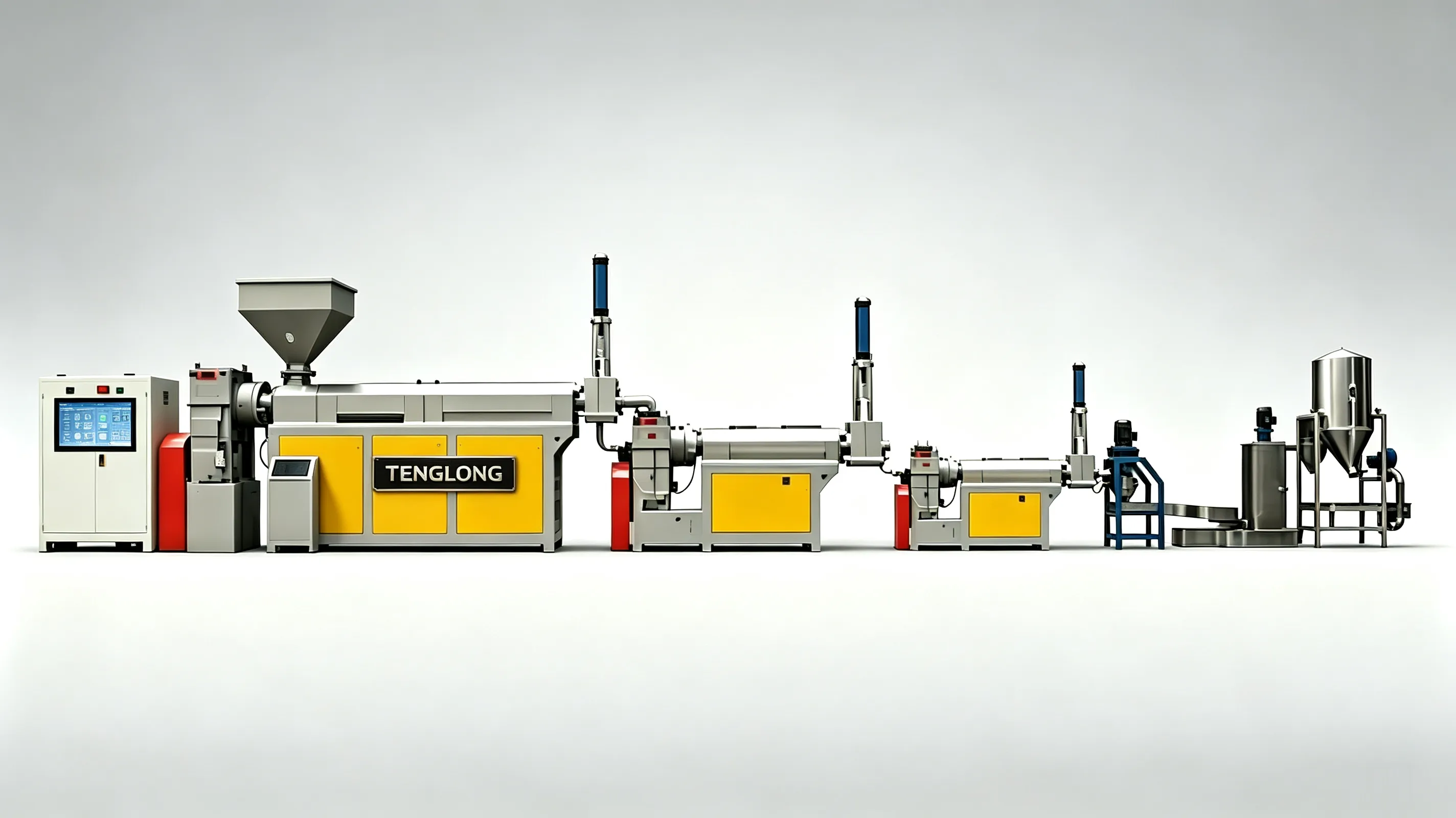
What we are asked to solve
The line runs but output has fallen 30% and screens blind every hour. We measure the actual feed, then specify venting and filtration rather than simply selling a bigger motor.
Single Screw Plastic GranulatorFrom bale to bagged pellet: crushing, washing, drying, pelletizing, water treatment and commissioning as one package with one warranty.
Plastic Granules Production LineFilled PP, glass-fibre PA or colour masterbatch needs dispersion, not just melting. We quote twin screw lines with gravimetric dosing and the dispersion sections that match your recipe.
Twin Screw Extruder Granulating LinePlastic granulators
Six common feedstocks and the platform we normally quote. If yours is not here, send a sample — the answer takes a day, not a month.
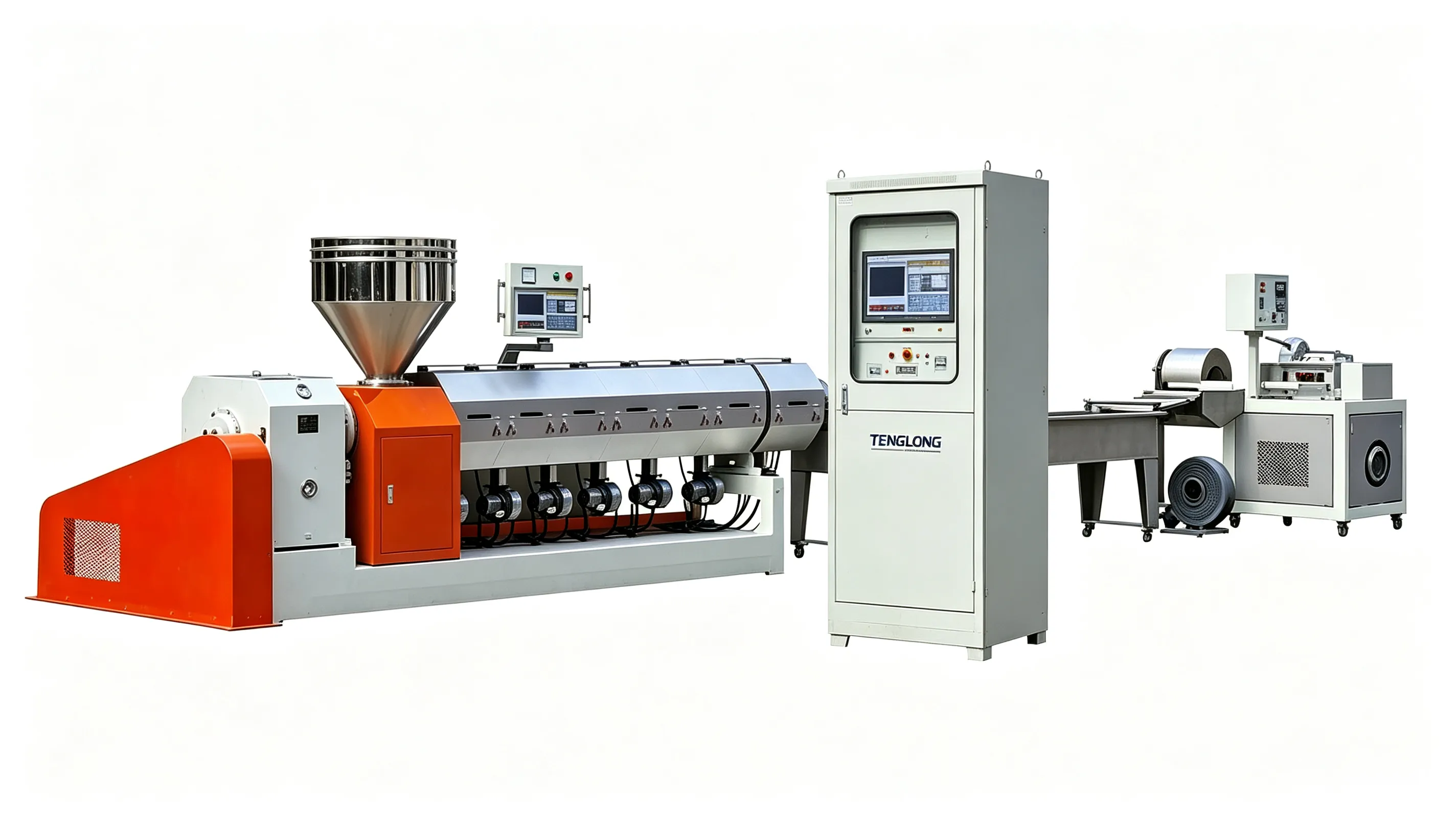 TL-SJ
Extrusion granulating
The workhorse pellet extruder for PP, PE and ABS regrind — 150 to 700 kg/h with one hardened screw.
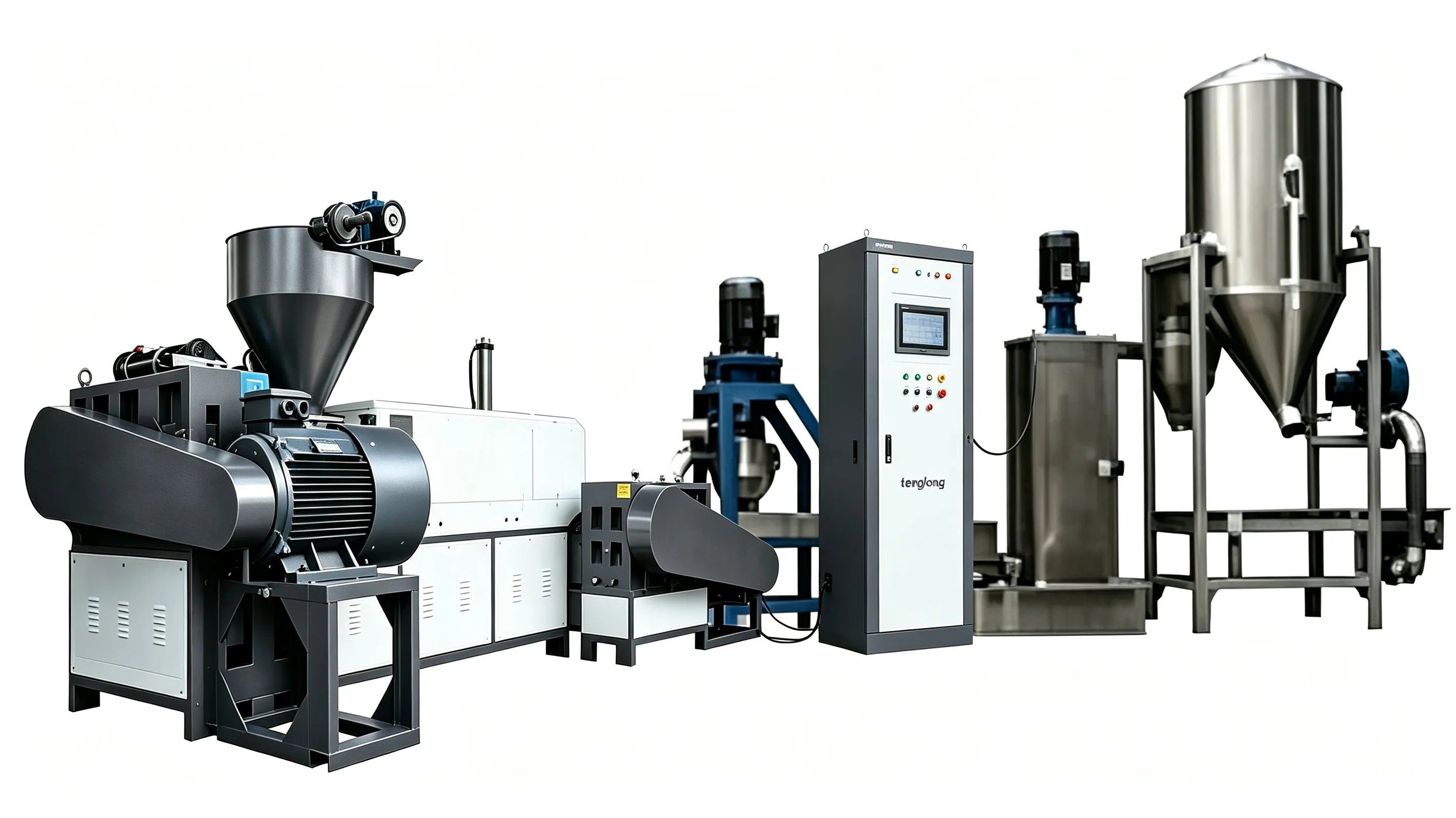 TL-TS
Extrusion granulating
Co-rotating 65–95 mm screws for filled, reinforced and alloyed compounds — 300 to 1,500 kg/h.
TL-2SRecycling lines
First stage melts and filters heavy contamination, second stage pelletizes — 300 to 1,200 kg/h of dirty waste plastic.
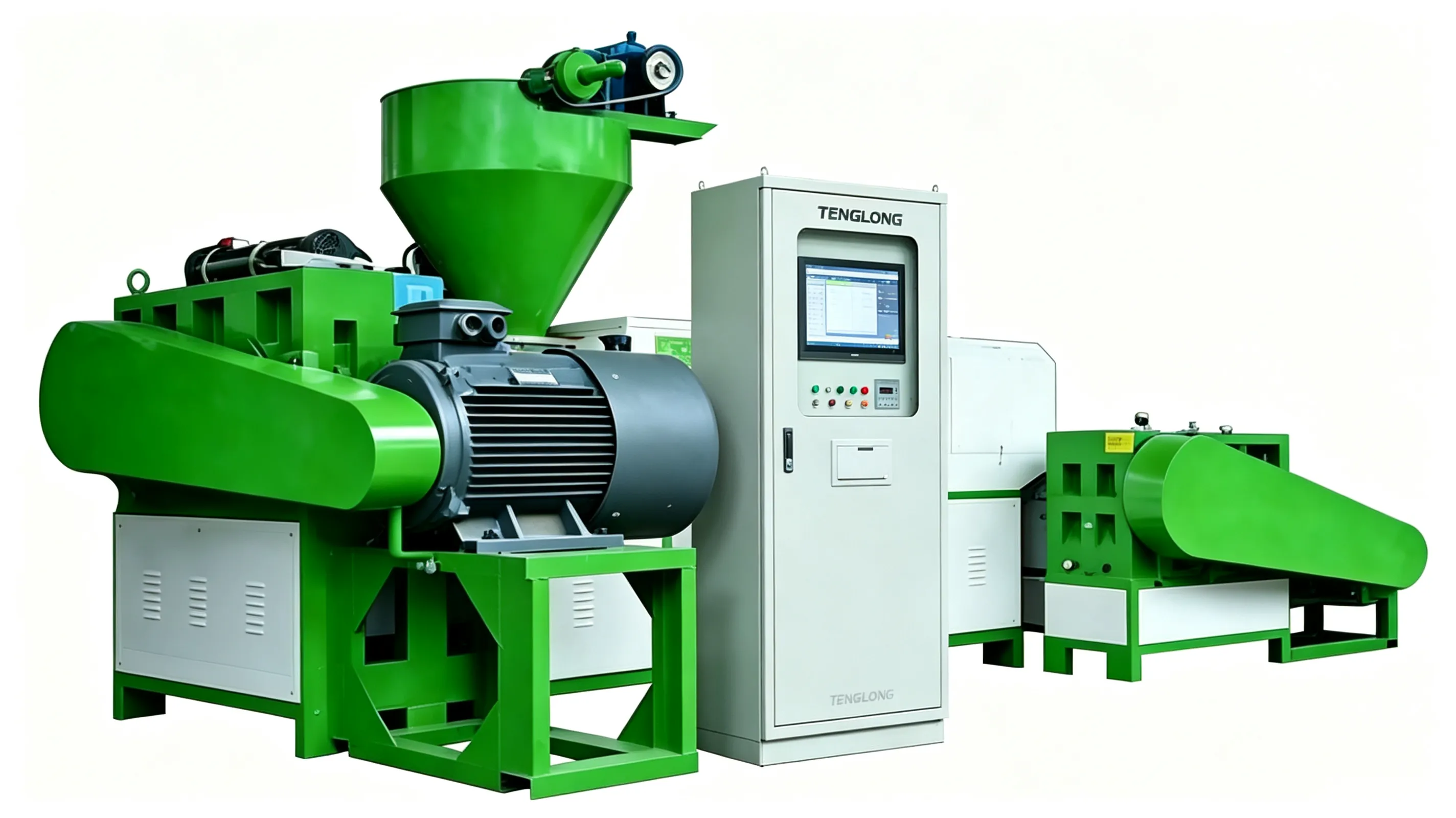 TL-WR
Pelletizing systems
Die-face cutting inside a water ring — 100 to 1,000 kg/h in 6 m of floor space, no strand bath.
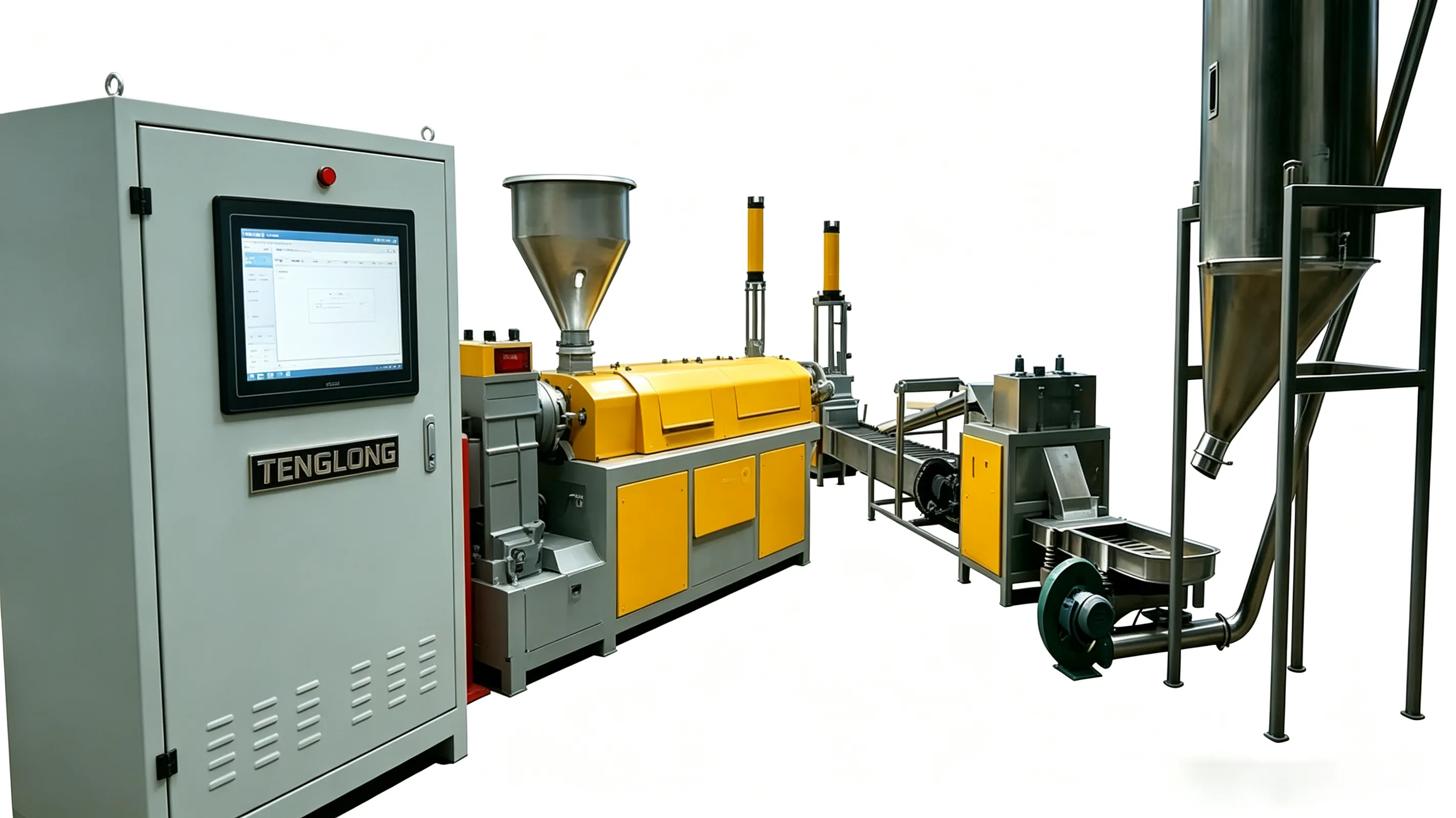 TL-UW
Pelletizing systems
Shear-cut pellets in a pressurised water chamber — 300 to 2,000 kg/h with spherical, dust-free pellets.
 TL-ST
Pelletizing systems
The reference line for cubic pellets: water bath, air knife and 12-blade cutter, 150 to 800 kg/h.
Selection matrix
Judge feed form and dirt load first, output second. This is the mapping we use when quoting.
| Your feedstock or situation | Recommended platform |
|---|---|
| Clean PP/PE flake from bottles or crates, 300–1,000 kg/h | Flakes pelletizing machineTL-FK |
| Agricultural or stretch film, washed, up to 5% contamination | Film granulating lineTL-FL |
| Post-consumer film or bags, unwashed or heavily inked | Two stage granulating lineTL-2S |
| CaCO3 filled PP, glass-fibre PA, colour masterbatch | Twin screw extruder lineTL-TS |
| Bottle-grade PET that must keep its IV | PET pelletizing lineTL-PET |
| Baled bottles to bagged granules, turnkey | Plastic granules production lineTL-GPL |
| In-house sprue recycling, 100–500 kg/h, limited floor space | Plastic pellet millTL-PM |
Process
No project starts with a price list. It starts with your material, because that is the only thing that decides the configuration.
Polymer, form, contamination, moisture, target output, voltage and country. Ten lines is enough.
Within one working day: recommended model, installed power, footprint, price range and lead time.
Send 10–20 kg. We run it, film it and report actual output, energy and pellet size distribution.
Drawing approval, 30% deposit, 25–45 days of build with weekly photo updates.
Four-hour run with your material, video before balance payment, then 3–10 days on site.
Why a factory
Six things you can verify on a factory visit.
Factory0.5–0.7 mm case, HV 900–1000, straightened to 0.03 mm. Not bought in and relabelled.
Four hours, logged by the PLC, with output, pressure, temperature and kWh in the report.
Siemens or WEG motors, ABB inverters, branded gearboxes and Schneider electrics — on the nameplate.
Knives, screens and heater bands are standard sizes, and we stock them for three years.
The engineer who sized your line signs the test report and answers the phone two years later.
If a project only works at a price we cannot build to, we say so before the deposit.
Industries
Eight industries, eight different definitions of a good pellet. Each page explains the feed, the dirt load and the specification we quote.
Technical notes
Selection logic, price structure, IV loss, cutting methods — written by the people who commission the machines.
· 9 min read
Feed form, dirt load, output, cutting method, power, footprint, service. In that order — and why getting the order wrong is the most expensive mistake in the project.
Read the note· 8 min read
Machine price, installation, power and wear parts over five years — with the FOB ranges we quote and the four options that move them most.
Read the note· 7 min read
Mixing, dispersion, cost per kg/h and maintenance — where the extra 2.5× investment in a twin screw actually goes.
Read the noteFAQ
The full 33 questions are grouped by selection, output, power, pellet quality and price.
Read all questionsChoose by feed form first: film and bags need a compactor, rigid flake needs a force feeder, lumps and purging need a two stage line. Then add dirt load: below 2% contamination a single screw works, 2–8% needs two stage venting, above 8% needs washing first. Output and motor size come last, because an oversized machine on a difficult feed is worse than a correctly sized one.
In everyday trade usage they overlap. Strictly, a granulator reduces scrap size and a pelletizer forms pellets; a plastic granulator usually means the whole machine that melts and cuts, while a pelletizer can mean just the cutting head. When specifying, describe the feed and the output — the names vary by region.
Single screw if you are recycling one or two known polymers without fillers. Twin screw if you are making a formulation: filler above 15%, glass fibre, flame retardant, or colour that must disperse below 20 µm. Twin screws cost 2–3 times more per kg/h, so do not buy one for plain regrind.
For post-consumer material, yes: crush to 25–30 mm, wash to below 0.5% contamination, dewater to below 2% moisture. For clean in-house scrap, none of the three is needed. For washed flake bought from a supplier, only a hopper dryer is sometimes required.
Yes. PP runs 10–15 °C hotter than LDPE; store both recipes in the PLC and the change is a five-minute temperature ramp plus a purge. What you cannot mix is colour: dark to light takes 40–60 minutes of cleaning.
The TL-PM-80, 100–150 kg/h with a 37 kW motor. The TL-MB-35 masterbatch line goes down to 20 kg/h. Below that, batch sizes are too small to fill the barrel and material loss exceeds the value of the batch.
Next step
Six fields is enough for a first recommendation: polymer, form, contamination, target output, voltage and country. Reply within one working day.
